 Change country:
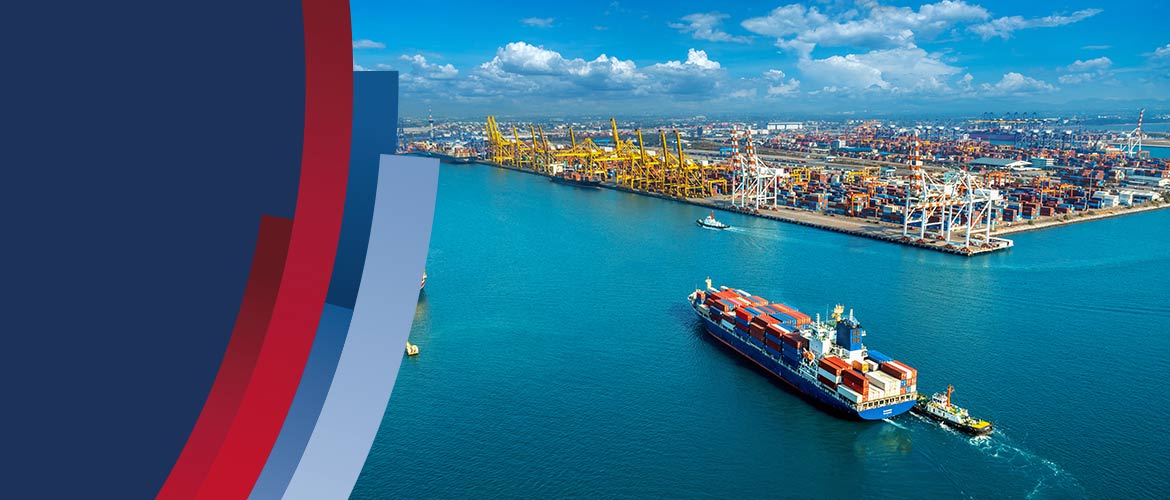
The rippling impact of geopolitical pressure around the Strait of Hormuz is rewriting the traditional container shipping calendar for shippers and their supply chain planning.
Container shipping has historically followed a predictable rhythm. Rates build ahead of Chinese New Year, ease through spring, and climb again into a Q3 peak as shippers prepare for the holiday season. That pattern has broken down in 2026.
Disruption emanating from the Strait of Hormuz situation is injecting an additional layer of cost and volatility into the market. Rather than drifting sideways after the Lunar New Year lull, spot rates on key trade lanes have turned and climbed sharply, reaching levels well above what would normally be expected at this point in the cycle. The traditional peak has not disappeared, it has moved forward, and it is building from a higher base.
Rate pressure is appearing across all major east–west trades
On the Shanghai–Los Angeles corridor, the usual post-CNY softening gave way to an unusually steep rate recovery. Eastbound transpacific spot rates are currently sitting several hundred dollars per 40ft above seasonal norms, even ahead of the usual late-Q3 build.
Asia–North Europe has followed a similar pattern, with deviations from normal seasonality emerging slightly earlier. The Mediterranean trade has seen some of the sharpest swings, with rate premiums dropping and then returning to near their highest levels.
Analysts caution against attributing every dollar of increase directly to Hormuz, because localised supply and demand dynamics also play a role, but the break from seasonal norms tracks closely with the escalation of Gulf risk, and the correlation between geopolitical tension and elevated spot pricing is now clearly established.
Front-loading and the bunker timing effect
Longer transit times resulting from Red Sea and Gulf diversions have already changed how shippers plan their cargo. For importers moving goods into Europe and North America ahead of China’s Golden Week, the effective loading window has shortened. Containers departing after mid-October risk missing peak-season distribution windows, which has driven bookings forward into late Q2 and early Q3.
This pattern was visible in both 2024 and 2025. In 2026, carriers are already reporting strengthening demand on Asia–North Europe and Asia–Med, with daily prices reacting to mid-May general rate increases and further hikes signalled for June.
Bunker costs have added a second layer of urgency. Following the latest Middle East escalation in late February, emergency fuel surcharges appeared rapidly on spot shipments. Contract cargo is tied to quarterly bunker adjustment factors (BAF), with the next reset due on 1 July. That date is now driving exceptionally strong shipper demand through May and into June, as larger cargo owners look to move volume before contract freight rates automatically increase.
Supply is tight and carriers have more flexibility than before
Vessel diversions around the Cape of Good Hope and alternative routing through the region have absorbed a meaningful share of global container capacity, extending voyage cycles and reducing available slots on key lanes.
New vessel deliveries into the main Asia–Europe and transpacific loops are limited in the near term, keeping the market short of ships and charter rates firm. Alliance restructuring has also given carriers more flexibility to use blank sailings as a tactical tool, and not just around holidays, but throughout the year, to match capacity to demand and support rate levels. For shippers, this translates into less predictability over available space and more exposure to short-notice rate moves.
What this means for your supply chain planning
The practical picture for UK and European importers is that the traditional Q3 peak has effectively been replaced by a longer, less predictable elevated-rate period running from late spring through to autumn.
Some early-season increases may moderate as the year progresses, but geopolitical risk and structural fuel cost pressure are now embedded in the market rather than being a temporary feature. Shippers planning on pre-Hormuz assumptions, whether for timing, cost or space, are likely to face unwelcome surprises.
Key actions to consider now:
- Review booking timelines — lead times need to reflect extended routing, not pre-diversion transit schedules.
- Stress-test freight budgets — assume elevated spot rates persist and model the 1 July BAF reset into contract cost.
- Secure forward capacity — carriers are rewarding committed volume with better space allocation; spot exposure is increasingly risky.
- Build contingency into peak plans — the system has less slack than in previous years to absorb sudden volume surges.
Noatum Logistics works with importers and exporters across global trade lanes to provide proactive capacity planning, market insight and end-to-end freight solutions designed to maintain cargo flow even as market conditions shift. Speak to our team to review your ocean freight strategy ahead of the peak.
 Unit 1, Alpha Way, Thorpe Industrial Estate