 Change country:
Despite the historically large new vessel order-book and signs of slower global demand growth, market conditions point toward moderation rather than a return to deep carrier discounting. Even a broad resumption of Red Sea and Suez transits is unlikely to deliver the surplus capacity many analysts once anticipated.
Instead, the year ahead is shaping up around a different priority: supply-chain certainty. Rates may ease modestly, but persistent operational risk should encourage shippers to focus less on headline pricing and more on service reliability, network resilience and execution under pressure.
This shift reflects deeper structural trends in container shipping. Infrastructure constraints, larger vessels and deliberate carrier capacity management are limiting how much effective capacity reaches the market. At the same time, performance volatility has become systemic rather than episodic, prompting cargo owners to reassess how they procure ocean freight.
Reliability data underlines that concern. According to eeSea data, global schedule reliability was just 34% at the end of the year, reinforcing the sense that disruption is now embedded in global liner networks rather than confined to peak seasons or isolated events.
China congestion highlights structural pressure
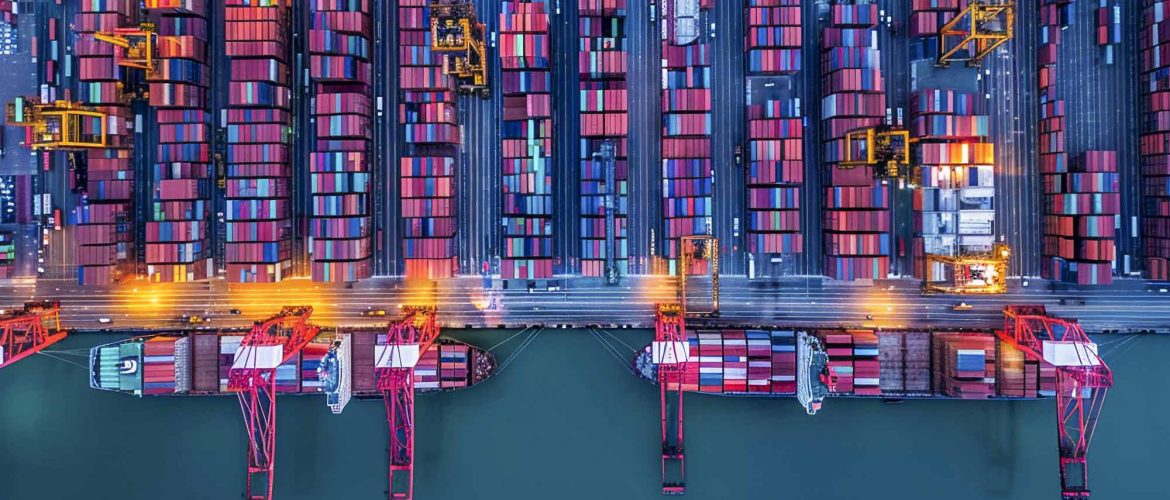
Congestion at Chinese ports illustrates why confidence in smooth execution remains fragile. China continues to account for the majority of containerised imports, yet its two largest gateways, Shanghai and Ningbo, are experiencing persistent delays, with vessels regularly waiting several days for berths.
The pressure reflects a mismatch between export growth and port expansion. While China invested heavily in port infrastructure in the decades following its accession to the World Trade Organisation, the pace of capacity growth has slowed just as outbound volumes have accelerated again. Export strength, driven in part by efforts to diversify trade and offset domestic economic weakness, is placing sustained strain on port systems.
China’s export performance underscores that momentum. Trade surplus levels passed the $1 trillion mark in late 2025, while its share of global exports has continued to rise. Reflecting those trends, S&P Global Market Intelligence revised its medium-term GDP growth forecasts upward, citing stronger export prospects as a key factor.
Bigger ships, bigger bottlenecks
Port congestion is compounded by vessel size. The modern container fleet bears little resemblance to that of a decade ago, with ultra-large vessels now dominating Asia–Europe and transpacific trades. Each call involves far higher container volumes, placing intense pressure on terminals whose land, labour and inland connections have not expanded at the same pace.
Performance data supports this view. Global port productivity, measured by vessel turnaround time relative to workload, remains well below pre-pandemic benchmarks, indicating that many ports are struggling to absorb current volumes efficiently, let alone additional capacity.
This reality also tempers potential expectations around Red Sea routings. While shorter transit times would release some theoretical capacity, physical constraints on land mean that bottlenecks are more likely to shift ashore rather than disappear. Faster voyages may simply result in more vessels arriving at ports that are already operating near their limits.
What this means for shippers
Taken together, these dynamics explain why price alone is no longer the dominant variable in ocean freight decisions. Shippers still face internal cost scrutiny, but they are increasingly weighing reliability, consistency and partner performance alongside rate negotiations.
For 2026, the container market appears set to focus on operational strength rather than headline discounts. In an environment where disruption is structural and infrastructure limits are binding, the ability to deliver predictable service is becoming a primary competitive differentiator for carriers.
As reliability becomes the defining factor in ocean freight decisions for 2026, Noatum Logistics supports shippers with proactive routing strategies, carrier management and end-to-end performance visibility.
Speak to our team to understand how schedule reliability, shifting capacity, port congestion and network realignment could affect your supply chain — and how we can help you maintain control, consistency and confidence in your ocean freight.
 Unit 1, Alpha Way, Thorpe Industrial Estate